
Perplexity was founded by Aravind Srinivas, Denis Yarats, Johnny Ho, and Andy Konwinski in 2022 and positions itself as an “AI-powered Swiss Army Knife.” Going beyond a simple list of search results, it responds conversationally and cites its sources, making information easier to verify than with other AI assistants. The company has since expanded its offerings to include Perplexity Comet, an agentic browser designed to simplify knowledge discovery and speed up decision-making within a single, convenient browser interface, where the system searches, reads, and summarizes information. With a 2025 valuation of $20 billion and fast user adoption, the platform’s mission is to simplify knowledge discovery and speed up decision-making.
Perplexity’s strengths—information retrieval, cited outputs, and simplifying answers—might be limiting for users who need customization, broader creative control, or research capabilities tailored to a specific niche (such as academic literature reviews, clinical evidence gathering, or document analysis). Let’s explore eight research-focused Perplexity alternatives to consider as your AI research copilot.
💡Key takeaways:
-
AI search platforms tailored for research offer faster, more customizable, and transparent ways to explore information.
-
Perplexity and popular alternatives help users simplify deep research, organize documents, verify sources, and tailor workflows for academic, professional, or enterprise use.
-
Choosing the right Perplexity alternative depends on factors such as model support, data privacy controls, enterprise integrations, citation quality, multi-modal capabilities, and research-specific workflows.
-
The top Perplexity alternatives worth evaluating include: Google Gemini, ChatGPT, Brave Search, Exa, You.com, Google Scholar, Elicit, and WolframAlpha.
What is Perplexity?
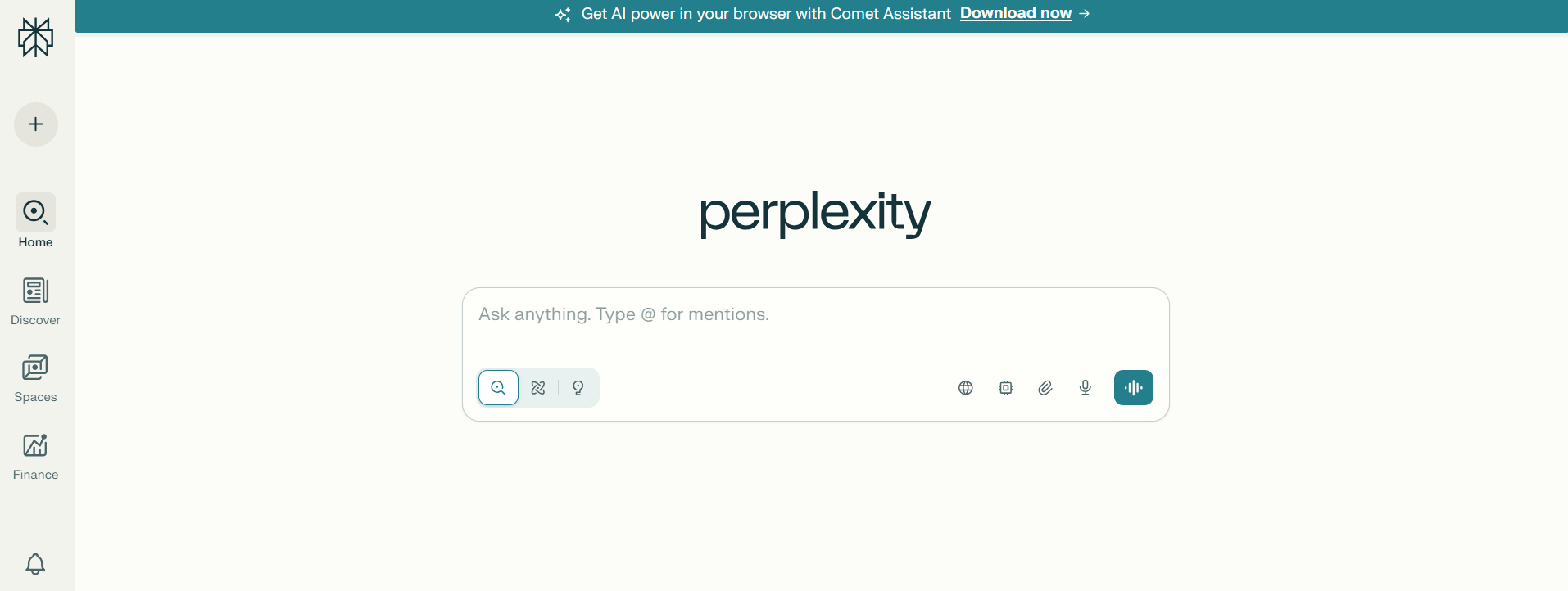
Perplexity is an AI search engine that delivers clear, citation-backed answers in a conversational format. It combines real-time web browsing with AI models like Perplexity’s proprietary Sonar model, as well as third-party models that include GPT-5 and Claude 4.0 Sonnet. Instead of relying on simple keyword matching, it interprets the intent behind your question, searches authoritative online sources, and summarizes the findings into an easily understandable response with transparent citations.
Perplexity key features:
-
Pro Search offers deeper, multi-source research, a selector for choosing desired AI models, and contextual dialogue for asking follow-up questions.
-
Personalization features store structured preferences like interests, keywords, and past tasks to improve response relevance over time.
-
Context portability carries stored context across all available models, so that users can change models without losing continuity.
-
Standard - Free. Basic search with limited Pro searches, weekly browser queries, basic file uploads, and no access to advanced AI models, image generation, or premium support.
-
Perplexity Pro - $20/month ($200/year). Practically unlimited Pro searches/day, access to advanced models (GPT-5.1, Claude 4.5, Gemini 3), Perplexity Labs & Research, unlimited file uploads, enhanced image generation, limited video generation, and priority support.
-
Education Pro - $4.99/month (with SheerID verification). Includes everything in Pro, extended access to Perplexity academic, study mode, unlimited image uploads, and student referral perks.
-
Perplexity Max - $200/month ($2,000/year). Adds unlimited access to all advanced AI models, Max Assistant on Comet, unlimited Labs queries, and highest-tier priority support.
-
Enterprise Pro - $40/month ($400/year). Designed for teams needing secure, compliant AI search with SOC2 Type II, single sign-on (SSO), data retention policies, and team management.
-
Enterprise Max - $325/month ($3,250/year). Includes everything in Enterprise Pro, virtually unlimited Labs & Research queries, expanded file limits (up to 10,000 files), and early access to new features.
**💡**Want a deeper dive into how Perplexity works? Read our guide to understand how Perplexity moves beyond traditional search engines by interpreting context, pulling in live data, and summarizing content.
How to choose a Perplexity alternative
Whether you default to Perplexity or there’s a better fit alternative depends on your research and workflow style, as well as the type of information you typically work with. Different options excel at academic evidence, conversational search, or API-driven retrieval, so it helps to evaluate them based on clear criteria.
-
Search transparency and citations: Look for tools that provide clear citations, side-by-side evidence, or source links to trace answers back to their origin. This is important if you rely on academic research or otherwise need information to be verifiable.
-
Use case: Some platforms, like Elicit, specialize in combing through scholarly papers, while others, like Brave Search, focus on web-wide retrieval. For specialized needs, choose a tool that aligns with the sources most relevant to your work.
-
User interface and workflow style: If you prefer conversational search, consider using tools like ChatGPT. If your workflow is structured and involves multiple research steps, tools like Elicit may be a better fit.
-
Real-time information needs: If your research depends on current events, recent developments, or fresh data, choose tools that offer live web browsing or frequently updated indexes. This matters for tasks such as tracking earnings reports, monitoring competitor pricing, following regulatory changes, or verifying claims about recent product launches—anywhere stale data could compromise your analysis.
-
Pricing and usage limits: Consider whether you need a free plan for occasional use, ongoing access with predictable subscription pricing, or pay-as-you-go API access for variable workloads. ChatGPT provides broad options (from personal to enterprise plans), Exa is more oriented toward developers and API-driven teams, while Elicit and WolframAlpha focus on academic and institutional research setups.
The top research-focused Perplexity alternatives
If Perplexity feels limiting due to pricing, customization, or data privacy concerns, it makes sense to explore other options to find the one that best fits your research style and productivity needs.
| Solution | Best for | Key features | Pricing |
|---|---|---|---|
| Google Gemini | Personalized study and summaries | Deep Research summaries, long-context analysis, NotebookLM for study guides, multi-format outputs | Free; Google AI Pro $20/month; Google AI Ultra $124.99/month |
| ChatGPT | Multimodal research | Text-image-voice, deep research reports, model selector, web browsing options, plugins/Apps SDK | Free; Go $5/month; Plus $20/month; Business $25/month; Pro $200/month; Enterprise custom pricing |
| Brave Search | Privacy-first web research | Ask modes, “Goggles” ranking filters, AI summaries with citations, no tracking | Free tier; Base $3/1k searches; Pro $5/1k searches; Custom pricing plans available for organizations |
| Exa | Semantic web research | Websets, hallucination detector, independent vector index | Free $10 credits; Research $5 per 1k operations; Pro $10 per 1k page reads; Custom pricing |
| You.com | Custom AI agent research workflows | Workflow tracker, build custom agents, enterprise private RAG | Free; Pro $20/month; Max $200/month; Enterprise custom pricing |
| Google Scholar | Detailed research questions | Language and region-based search filtering, skimmable summaries with citation links, Scholar Profiles with citations and h-index tracking | Free |
| Elicit | Academic research | Research paper/PubMed/clinical filtering, Upload research papers and search information within | Free; Plus $10/month; Pro $42/month; Team $65/month; Enterprise custom pricing |
| WolframAlpha | Academic problem solving | Performs step by step mathematical calculations and chemical equations | Free; Pro $5/month step-by-step solutions; Pro Premium $8.25/month all features and priority customer support. |
###General-purpose AI research assistants
General-purpose AI research assistants combine chat-based reasoning with web search, document analysis, and multi-model capabilities. They assist users in exploring topics, solving problems, and generating insights across a wide range of subjects.
1. Google Gemini for personalized study and summaries
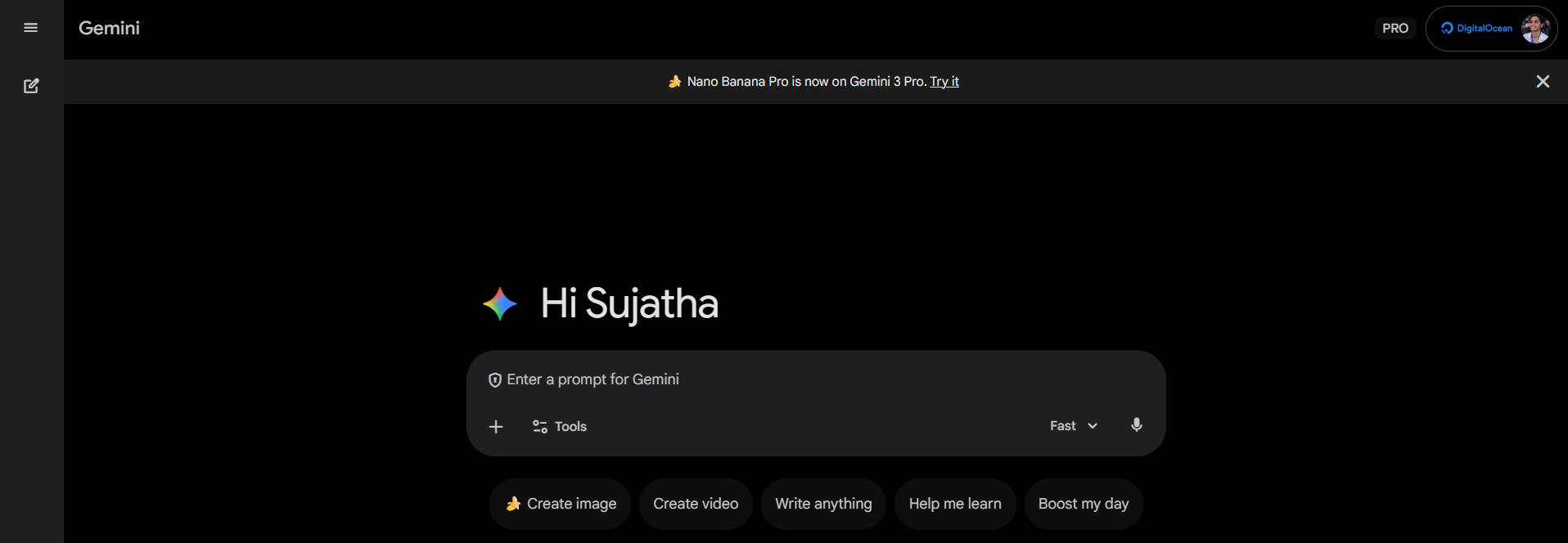
Google Gemini is Google’s multimodal AI platform with creative, analytical, and research-driven workflows. It was built collaboratively by Google DeepMind and Google Research engineered from the ground up to natively understand and reason across text, images, audio, video, and code. Gemini includes access to NotebookLM where users can upload sources and receive precise, citation-backed insights, summaries, and study guides. Gemini 3 was introduced in November 2025 as Google’s most advanced AI model, featuring multimodal reasoning across text, images, audio, video, and code.
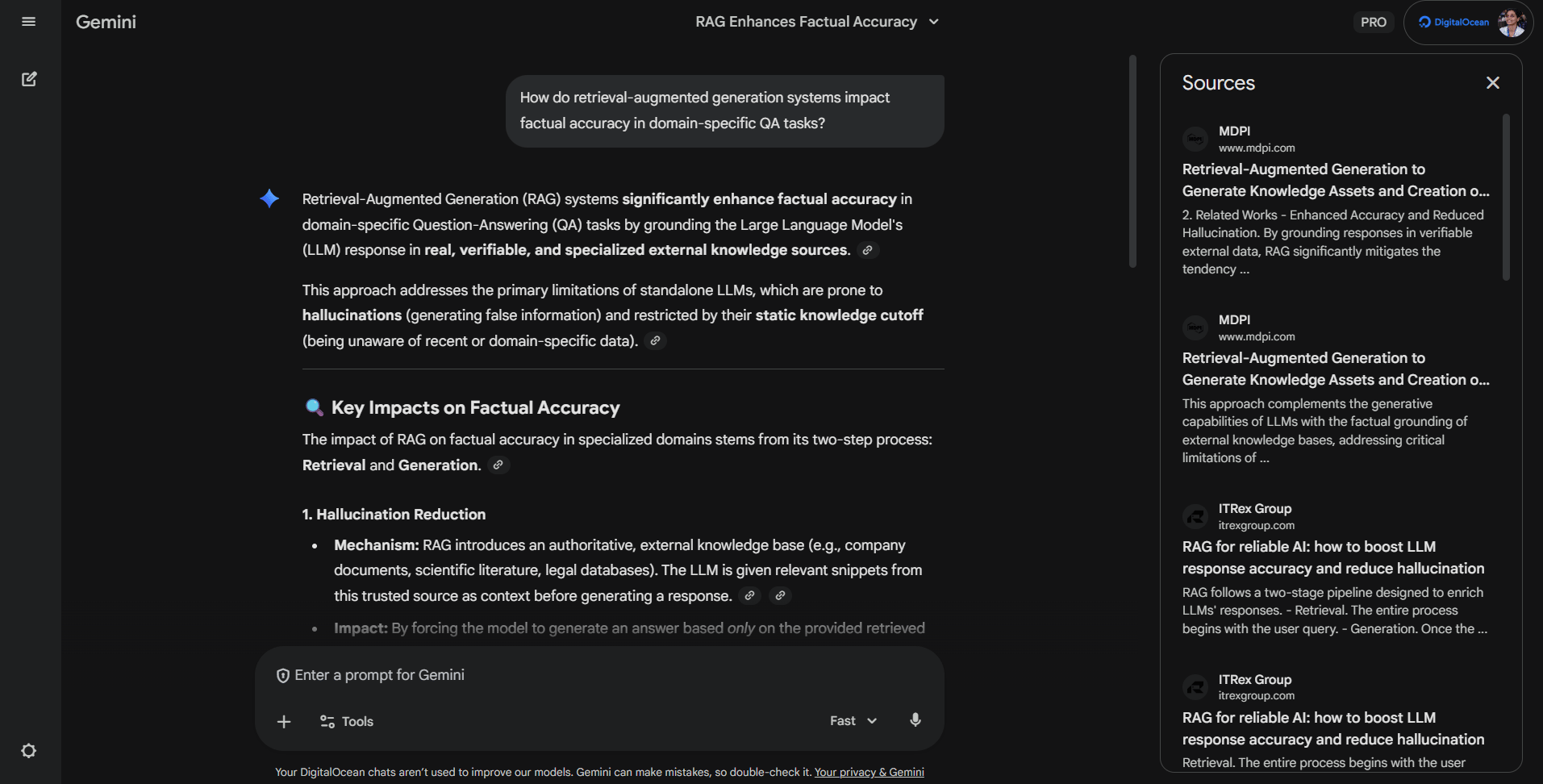
Gemini displays answers alongside a dedicated sources panel, citing the articles it drew from. Within the response itself, small link icons appear next to key statements to trace each claim back to a specific source.
Google Gemini key features:
-
Users can choose between two Gemini models while asking questions: “Fast” for quick responses, and “Thinking with 3 Pro” for deeper reasoning on complex topics.
-
Generates videos, images, and written content with Google Search grounding.
-
NotebookLM features a workspace with tools that enable you to convert your sources into various learning and presentation formats, including audio overviews, video overviews, mind maps, reports, flashcards, quizzes, infographics, and slide decks.
-
Free - $0/month. Includes access to the Gemini app (Gemini 2.5 Flash), limited creation tools, basic editing features, NotebookLM, Whisk image generation (Imagen 4 + Veo 3), Flow for multimodal creation, and 15 GB of Google storage.
-
Google AI Pro - $20/month; First month free for students. Adds Gemini 3 Pro, NotebookLM advanced tools, Gemini in Gmail/Docs/Slides, Chrome AI features, Workspace enhancements, and 2 TB of storage.
-
Google AI Ultra - $124.99/month for 3 months (after which it costs $249.99/month), highest-quality image/video generation with Veo 3, Jax tool access for asynchronous coding, Gemini Code Assist, premium Workspace features, YouTube Premium, and 10 TB of storage.
2. ChatGPT for multimodal research
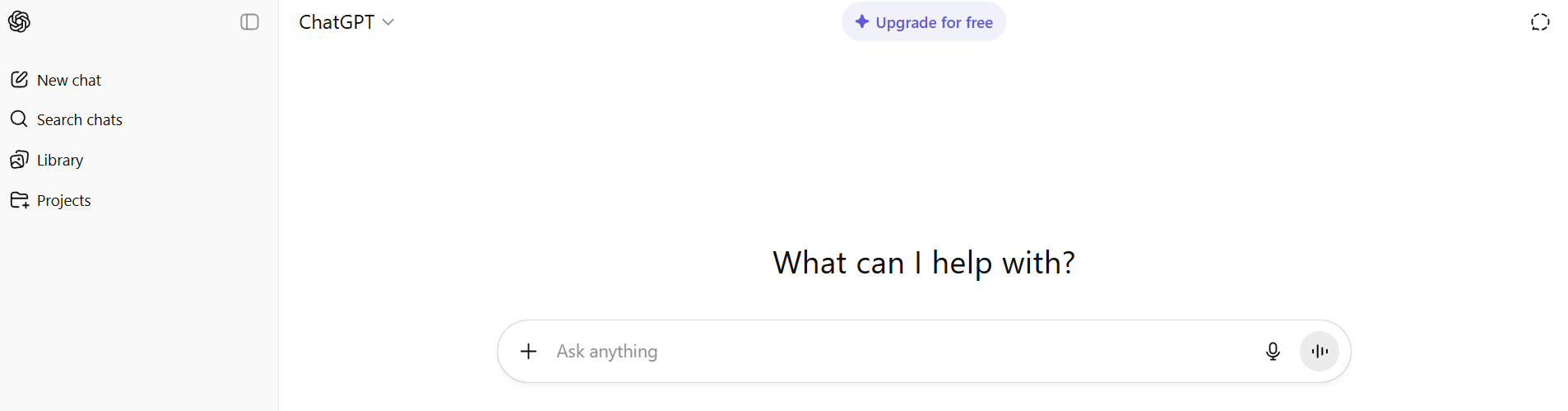
ChatGPT is a conversational AI for asking questions and receiving responses in natural language. Developed by OpenAI, it was first launched in November 2022 to make large language models accessible to the public. ChatGPT responds based on its trained knowledge up to its most recent data cutoff while also supporting web browsing for real-time information when enabled.
ChatGPT 5 gives clean, structured answers by default, but it won’t include citations unless explicitly asked in a prompt like “Give me sources”.
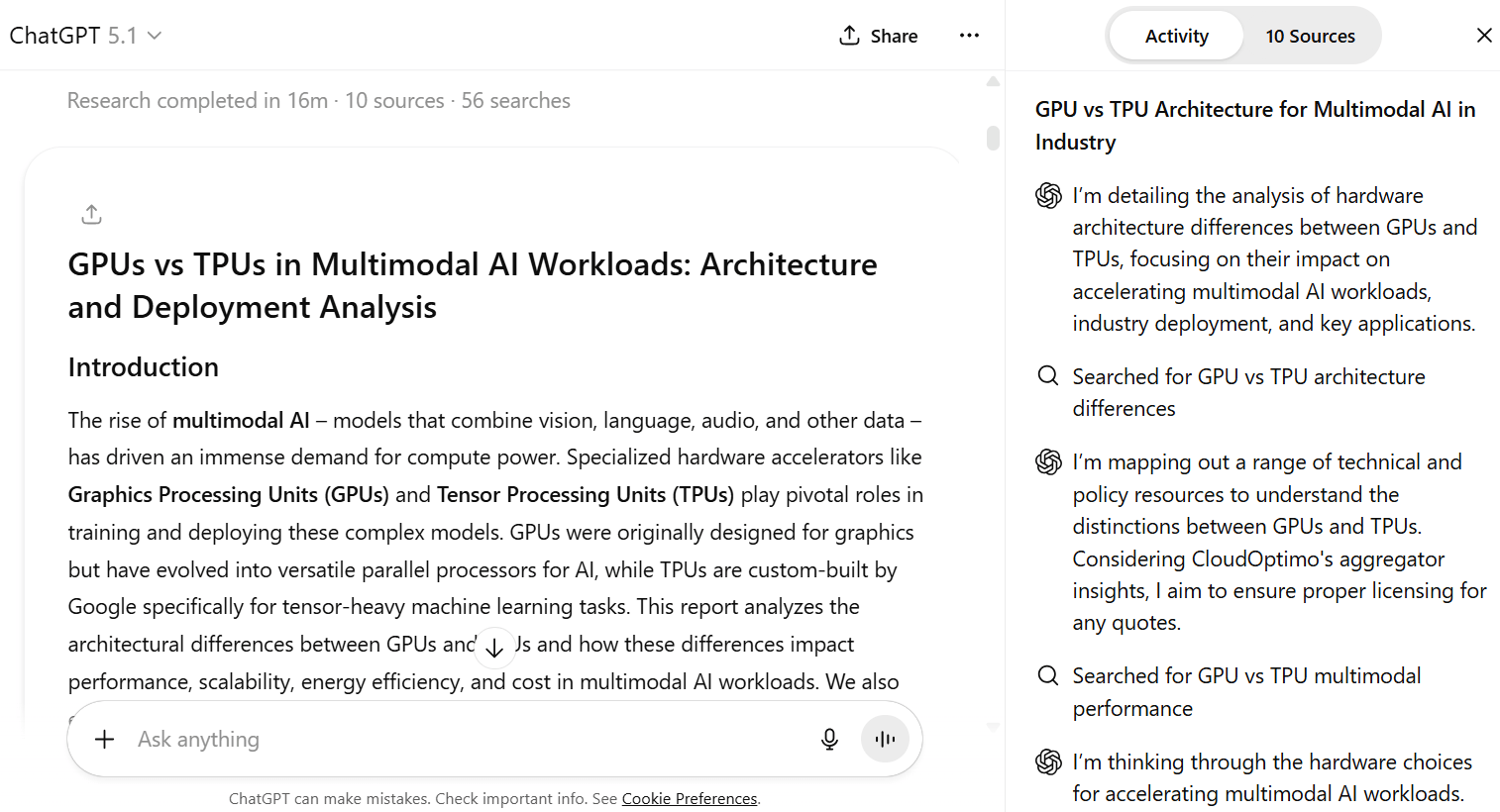
The deep research feature in ChatGPT handles complex, multi-step queries by iteratively searching, comparing sources, and generating detailed reports. When tested with “Analyze the role of GPUs and TPUs in accelerating multimodal AI workloads,” ChatGPT clarified the scope, spent around 16 minutes researching, and delivered a comprehensive report covering architecture differences and deployment trends.
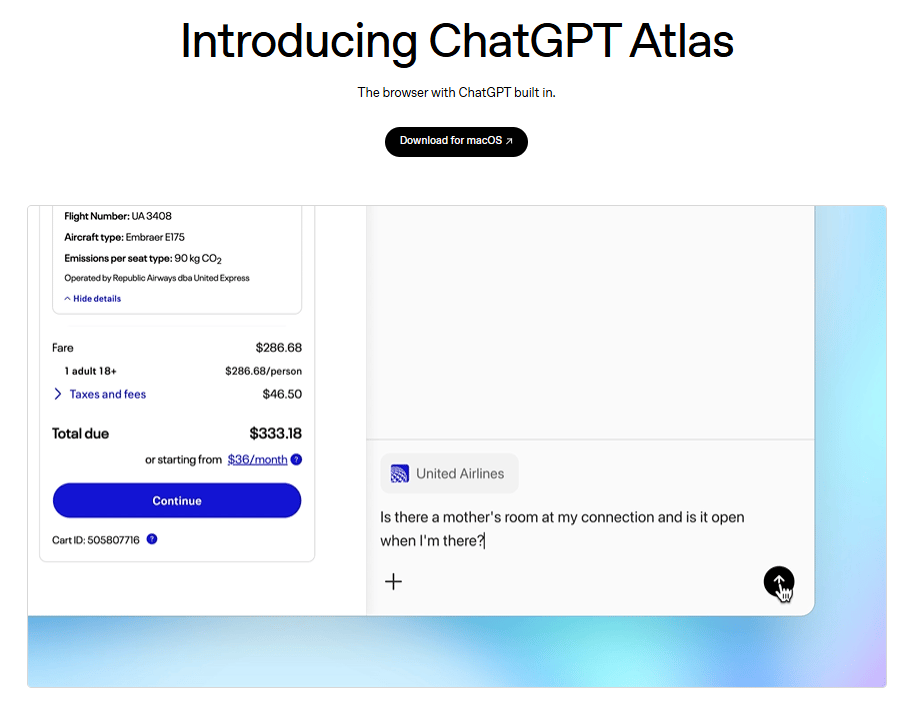
On October 21, 2025, ChatGPT Atlas was introduced as OpenAI’s official agentic browser—with ChatGPT built directly into the web experience. It was created to rethink how users interact with the web, by embedding an AI assistant into every page for summarizing content, helping with tasks, and incorporating context from past chats.
ChatGPT key features:
-
Users can upload an image or speak a question and receive a unified response across modalities.
-
Integrates with third-party apps and browser tools via MCP servers or the Apps SDK to interface with external services in chat.
-
Advanced research-oriented capabilities like retrieving up-to-date web data, performing analysis, or navigating documents to support in-depth answers.
-
Free - $0/month. Access to GPT-5, real-time web search, limited messages and file uploads, deep research, and image generation.
-
Go : $5/month. Extended access to GPT-5, image generation, and file uploads.
-
Plus - $20/month. Everything in Go, advanced reasoning with GPT-5, expanded deep research, memory and context, limited access to Sora 1 video generation.
-
Business - $25/month. All Plus features, integrates with Slack, Google Drive, SharePoint, and GitHub.
-
Pro - $200/month. All Plus features, Pro reasoning with GPT-5, unlimited messages and uploads, maximum deep research, unlimited and faster image creation, extended access to Sora 1 video generation, and research preview of new features.
-
Enterprise - Custom pricing. All Business features, flexible deep research, custom pricing for organizations, enterprise-level security and controls, 24/7 priority support, and volume discounts.
-
Confused about choosing between Claude and ChatGPT as your coding assistant? Read our Claude vs ChatGPT article to find your ideal fit.
-
Can Claude Code help you build a real application from a product plan? Watch and learn how to integrate Claude Code, Cursor, and the SeaNotes open-source SaaS starter kit to launch a project. ⬇️
Web search and retrieval engines
Web search and retrieval engines use independent indexes or AI ranking systems that deliver fast, relevant, and verifiable information. These tools prioritize transparency and customizable search experiences for researchers and professionals.
3. Brave Search for privacy-first web research
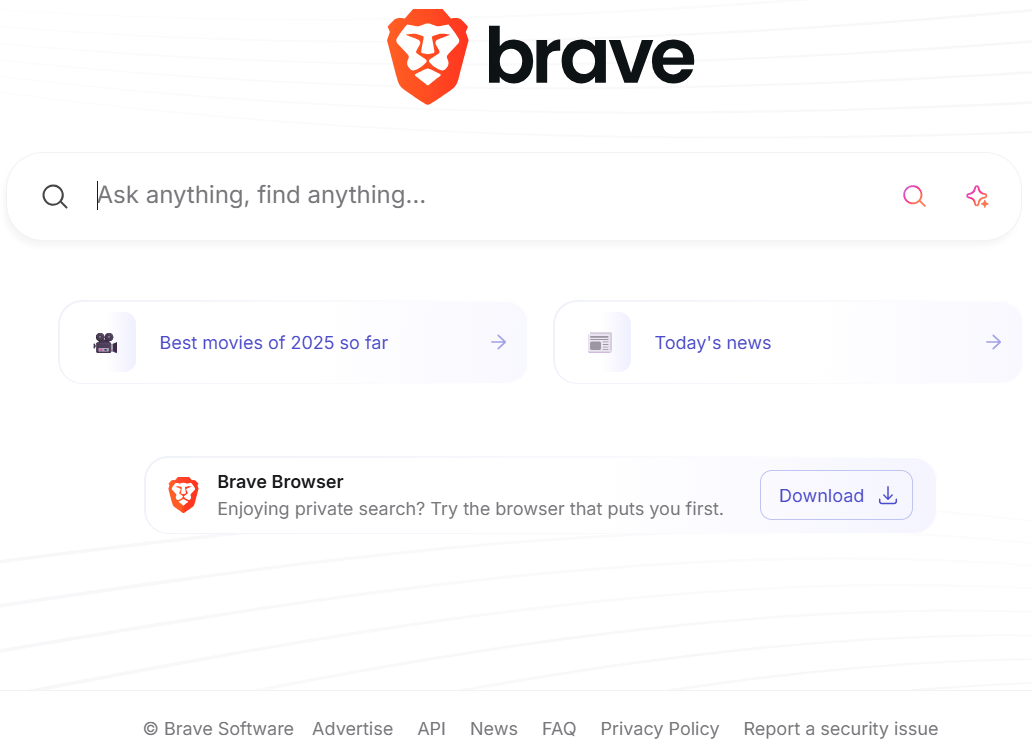
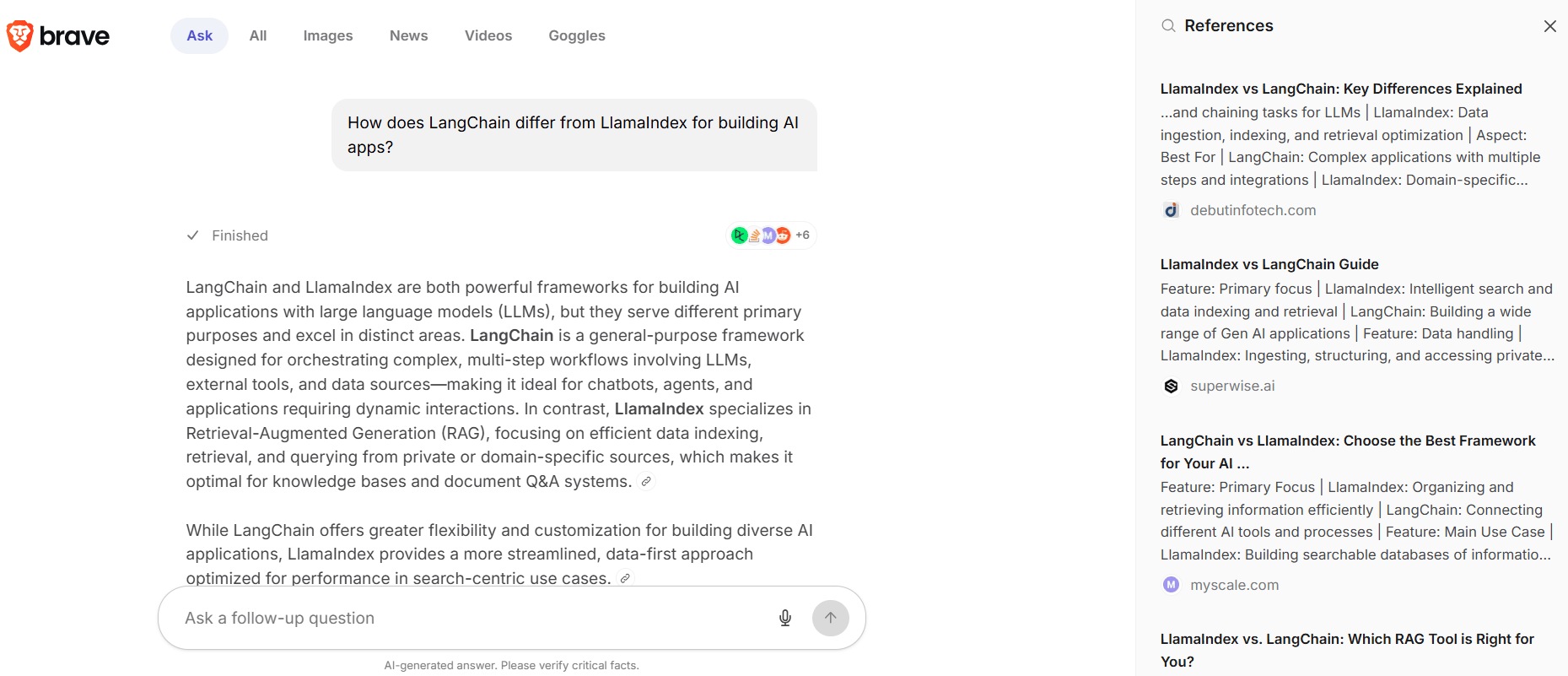
Brave Search is a web search engine built on an independent index—it crawls, and ranks the web itself (not outsourcing results to Google or Bing) to deliver search results. It does not collect, transmit, or use personal data to build user profiles, prioritizing privacy at the core of its design. Its tools combine familiar search behaviour with AI summaries which feels similar to Google Search with AI overviews. Leo is Brave’s built-in AI assistant that lets you ask questions, summarize content, translate text, analyze documents, and generate new content. It’s private by design, with no account needed and no chat data retained or used for model training.
Search mode functions like a traditional search engine, displaying web results, images, and videos in a familiar layout.
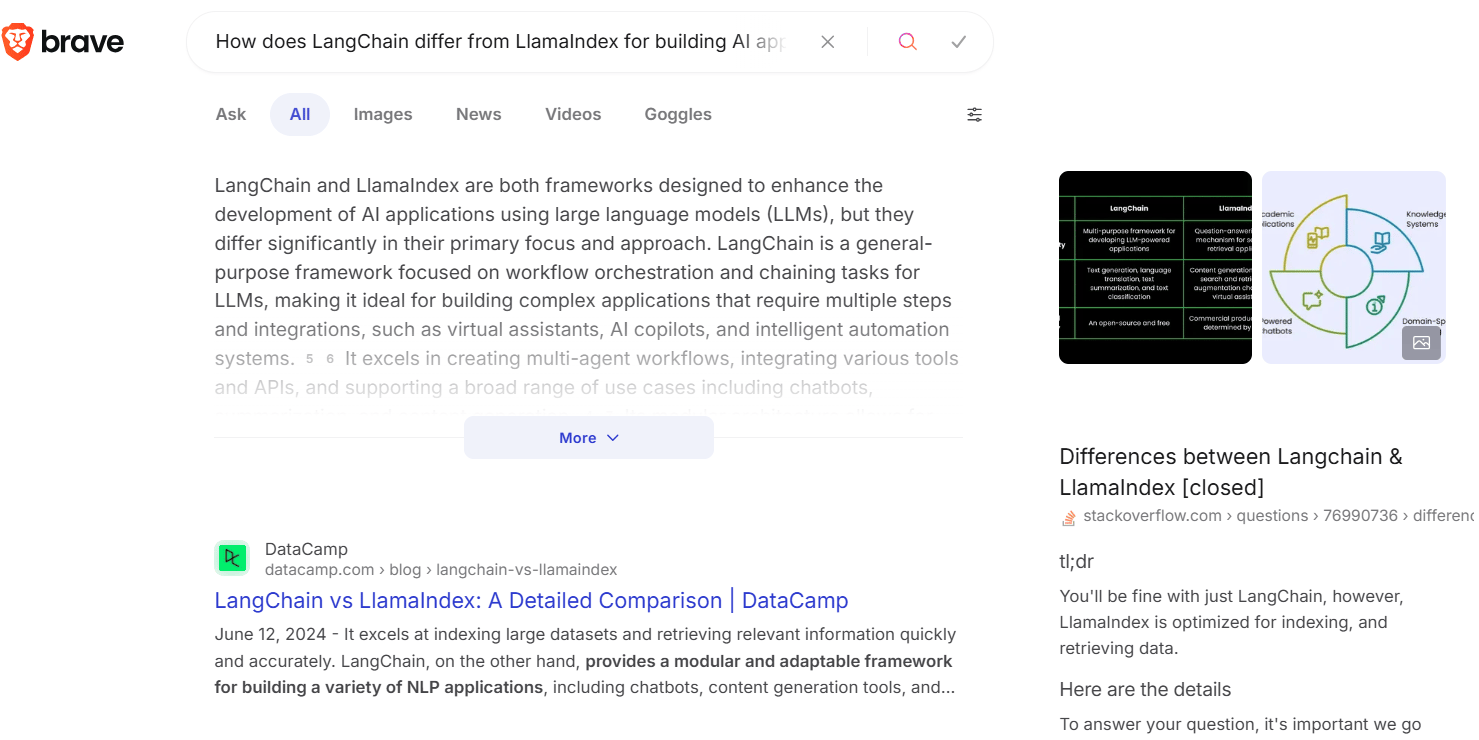
Ask mode acts like a conversational AI built directly into Brave Search, synthesizing information from multiple webpages into a single, concise answer with full citations. Unlike Big Tech search engines like Google, and Microsoft, Brave’s AI doesn’t profile users, retain queries, or train on personal data. All answers are generated anonymously and directly in the SERP. Ask mode is available on both desktop and mobile.
Brave Search key features:
-
Built-in Firewall with VPN service that secures all network activity within the browser and your device.
-
Brave Browser supports close to 160 languages, and Brave Search is available in almost 20 languages.
-
The “Goggles” feature facilitates users or communities creating custom ranking filters to modify how results are displayed.
-
Free - Up to 2,000 searches per month, limited to 1 request per second.
-
Base - $3 per 1,000 searches, up to 20 requests per second and a total of 20 million searches per month.
-
Pro - $5 per 1,000 searches, supports 50 requests per second, and no monthly cap.
-
Custom - Tailored pricing for organizations.
4. Exa for semantic research
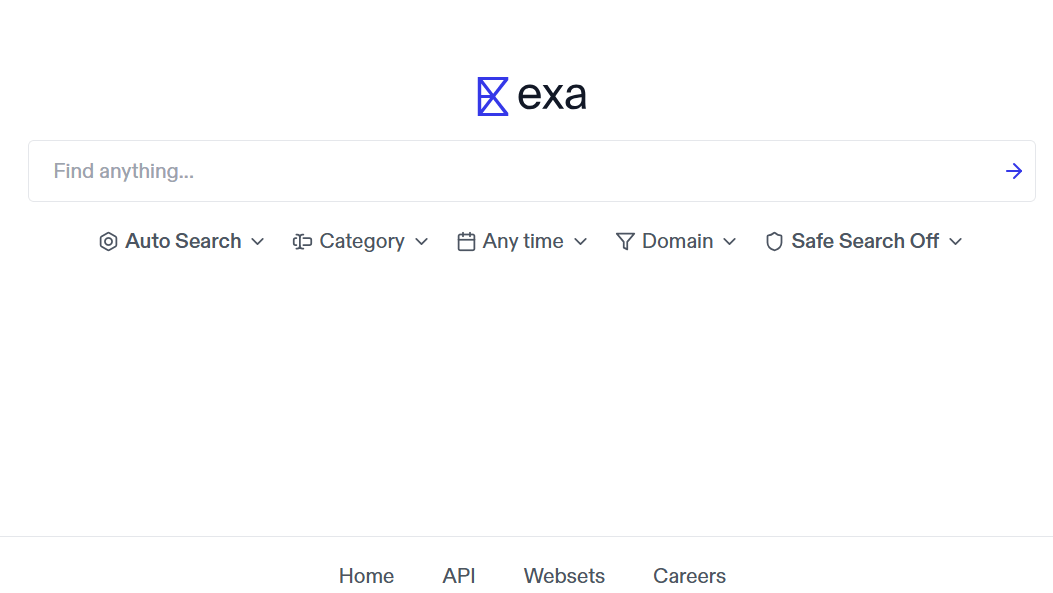
Exa is a search engine that uses a novel neural architecture rather than keyword-based indexing. Neural architectures allow Exa to understand the meaning and context of queries rather than matching keywords, which makes it strong for research-style questions where phrasing varies and relevant sources may not contain exact query terms. In 2025, it raised $85 million in funding, developing a proprietary web-scale vector database and embedding cluster. The company’s core goal is to provide “perfect web search” by giving users control over large-scale web content.
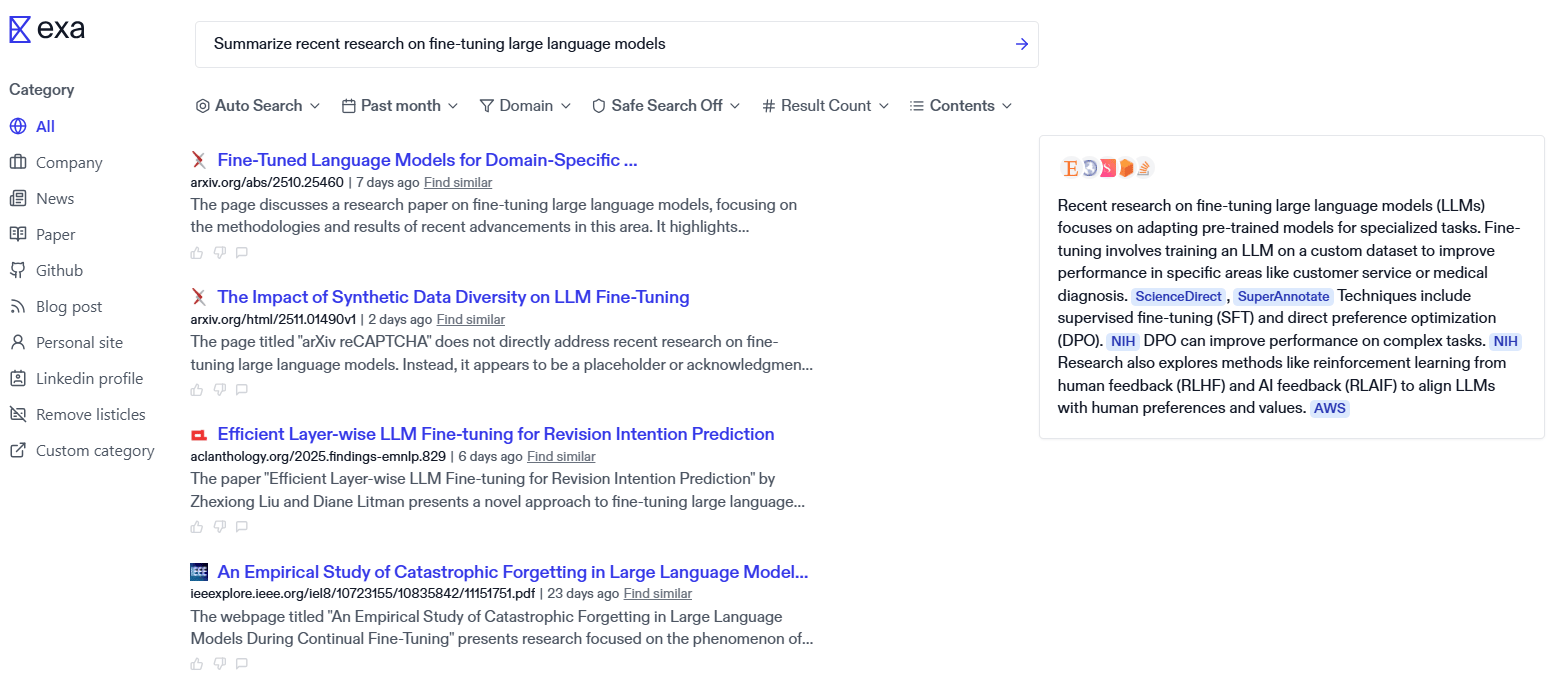
Exa offers three search modes: Auto, which intelligently switches between modes based on the query; Neural, which focuses on semantic understanding for deeper, context-based results; and Fast, which prioritizes quick responses for straightforward queries. For refining queries, the Category filter narrows results to sources like research papers, GitHub repositories, blog posts, or company sites, while the Domain filter helps include or exclude specific websites.
Responses include recent results in a traditional search format, accompanied by a short contextual blurb beside each link, plus a quick summary of each page’s contents.
Exa features:
-
Hallucination Detector verifies LLM-generated content by breaking down the input text into individual factual claims, uses semantic search to source evidence for each claim, then returns a confidence-scored assessment to help determine whether the claims are supported or refuted.
-
The Websets tool is available for building custom web content collections according to specified criteria, enriching results and exporting structured data.
-
The independent web-scale index is optimized for AI agents and research workflows rather than ad-driven ranking systems.
Exa’s search engine is free to use. Developer access to the Exa API, Exa Research, and Websets follows a usage-based pricing model for searches, page reads, and agentic reasoning tasks.
5. You.com for custom AI agent research workflows
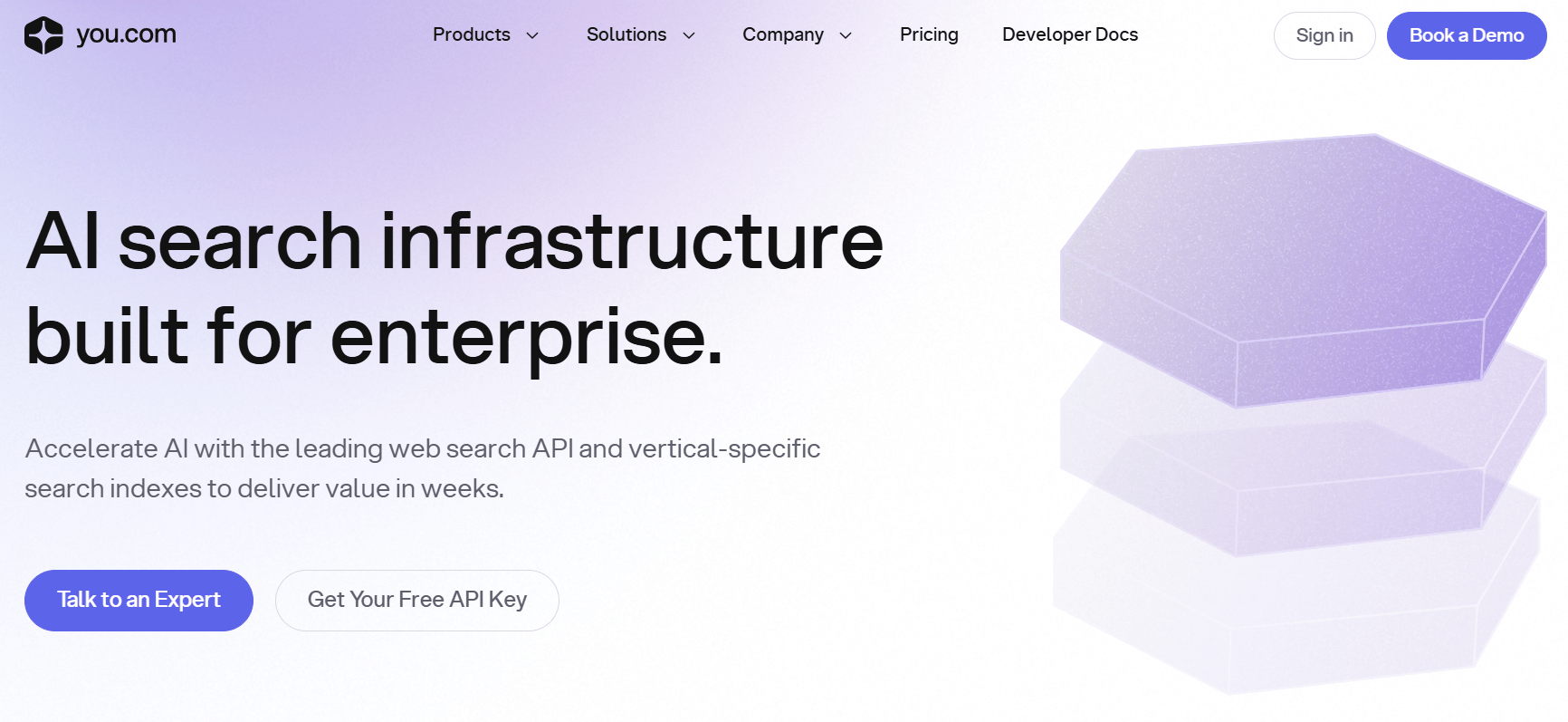
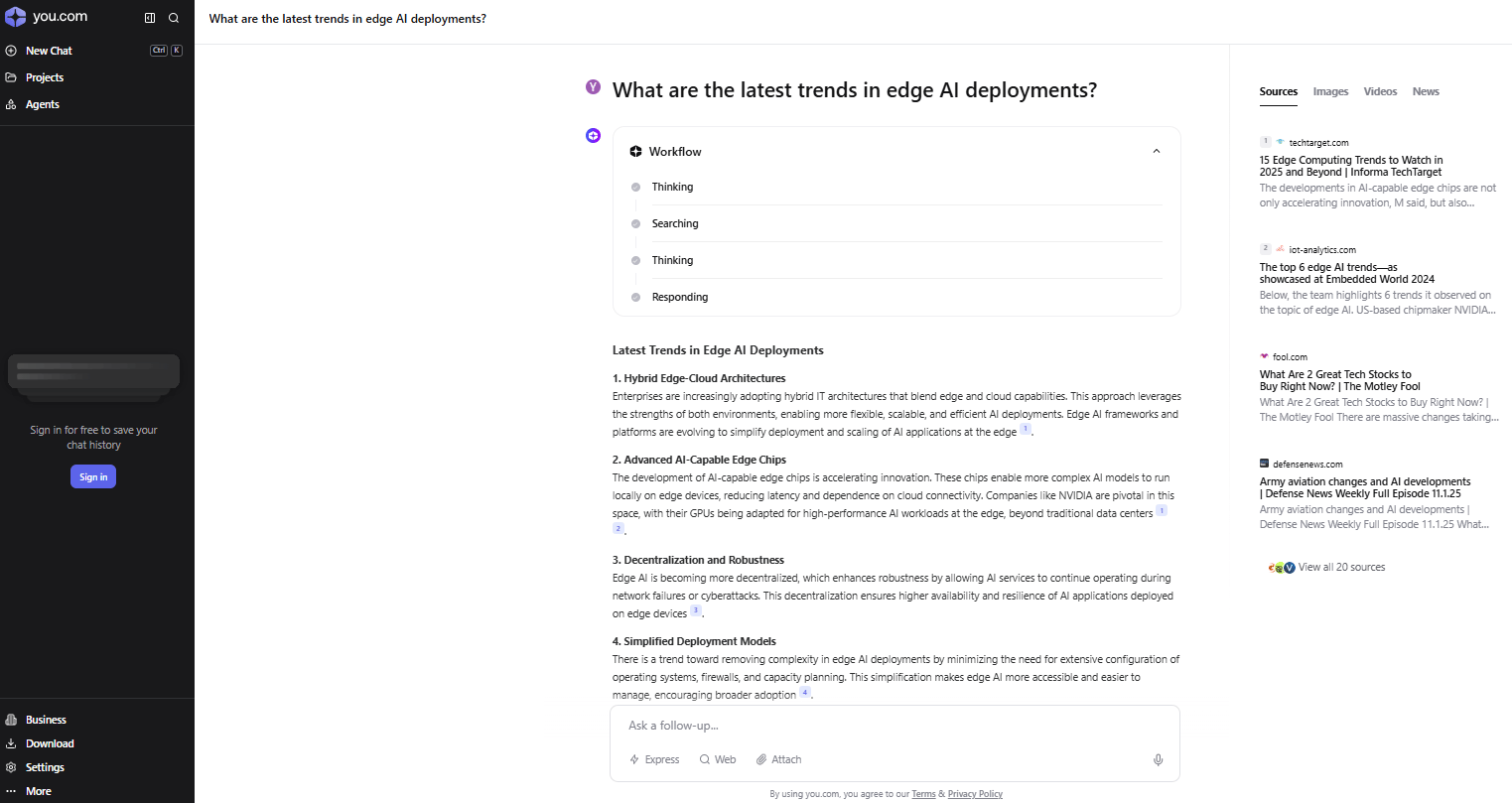
You.com is an enterprise search infrastructure, offering a Web Search API, data integration pipelines, and Private RAG to combine web content with an organization’s internal knowledge in a secure environment. You.com’s Chat mode is similar to Perplexity, with conversational answers, inline citations, and SERP-style side panels.
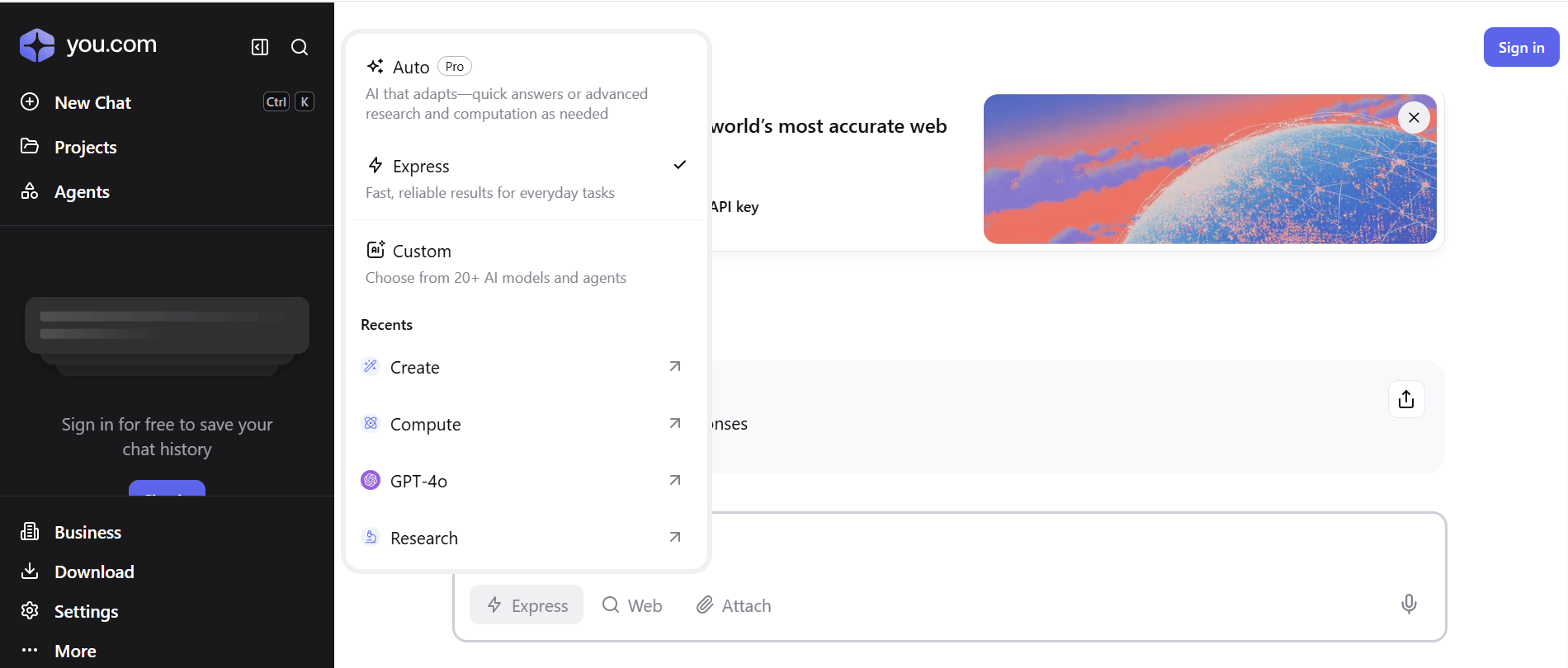
You.com offers three modes, each designed for a different type of interaction:
-
Auto adapts intelligently, switching between quick answers and deep reasoning.
-
Express delivers fast, reliable responses for everyday questions.
-
Custom gives the choice to pick from more than 20 AI models and agents for tailored use cases.
Citations appear as footnotes inline with answers. The right-hand sidebar displays related sources, images, videos, and news, making it easier to verify facts and deeply explore the topic.
You.com key features:
-
Web Search API delivers live, structured results with full-text snippets and citations for AI agents.
-
Enterprises can confidently connect internal data sources (e.g., Google Drive, SharePoint, Salesforce) in tandem with features like zero data retention and SOC 2 compliance.
-
Build custom AI agents/workflows for research, content generation, and other business use-cases that integrate web, private data, and multi-model logic.
-
Free - Limited basic queries and live web search.
-
Pro - $20/month. Access to third-party AI models (e.g., GPT-4o, Claude 3.5), You.com University GenAI training and certification included in annual plans, Up to 64k context window.
-
Max - $200/month. Includes all Pro features, unlimited file uploads, up to 200k context window, 24/7 online support.
-
Enterprise - Custom pricing. Includes all Max features, tailored for organizations with large-scale needs, secure data access from 100KB to 100TB+ with private RAG.
Academic research tools
Academic research tools are designed to focus searches on scholarly papers, clinical trials, and structured datasets. They provide AI-assisted summaries, metadata insights, and workflow automation for evidence-based research.
6. Google Scholar for answering detailed research questions

Google Scholar is a freely accessible academic search engine launched by Google in November 2004, developed by Anurag Acharya and Alex Verstak. It is designed to index scholarly articles, theses, books, conference papers, and patents across disciplines. It aggregates content from publishers, universities, repositories, and the open web.
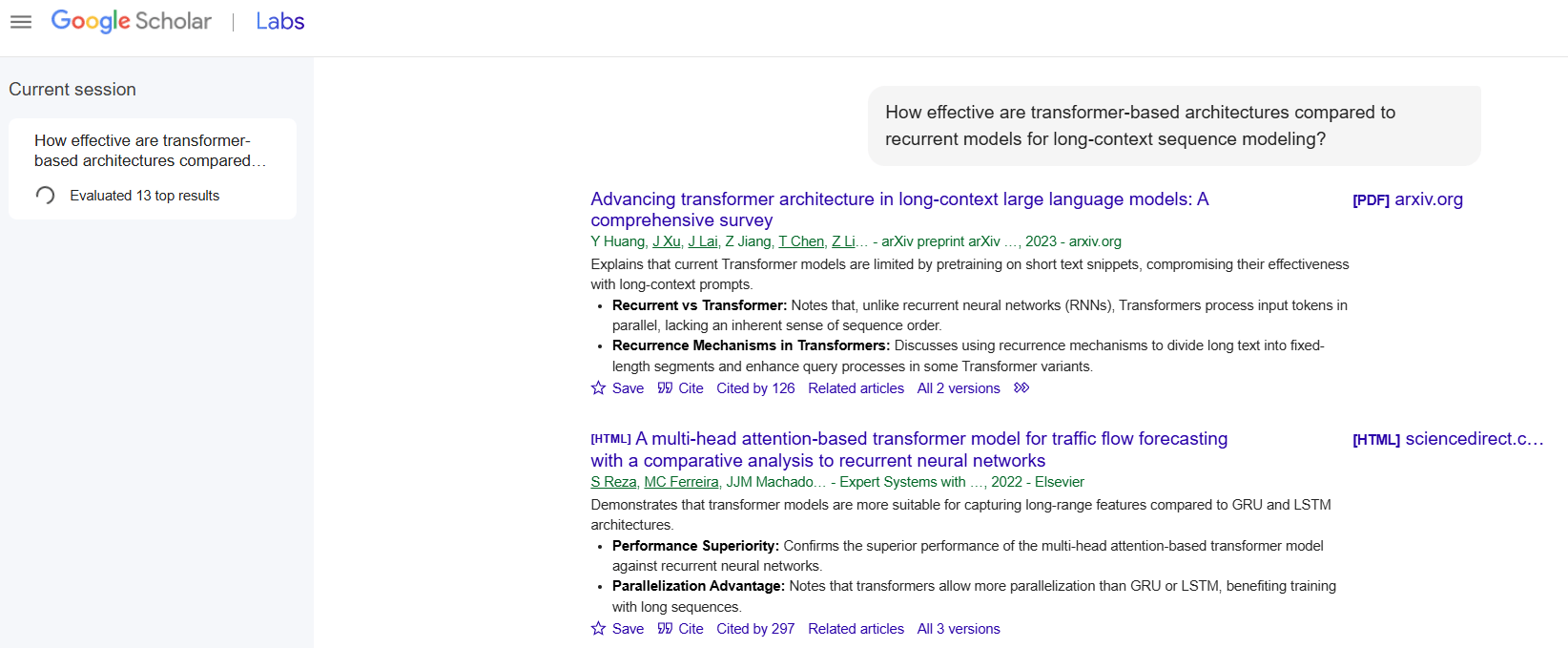
When you ask a question in Google Scholar, the tool gives a summary, easily skimmable bullet-point takeaways, along with links to citations and related articles.
Google Scholar key features:
-
Google Scholar Labs, analyzes questions, identifies relevant topics, searches for matching papers, and explains how each paper answers the user’s query.
-
Select your preferred interface language and limit search results to publications written in specific languages to discover research in the formats or regions most relevant to your work.
-
Supports Google Scholar Profiles for tracking citations, h-index (a metric that measures both the productivity and impact of a researcher’s published work), and publication visibility, helping authors showcase their work.
Google Scholar pricing:
Free.
7. Elicit for academic research
Elicit is a research focused AI assistant to help users with academic literature. It scouts answers from thousands of published papers and clinical trial registrations. It is useful for users from high school students to industry researchers and for expert-level workflows in graduate-level and professional research.
Elicit first evaluates the strength of your prompt. For a prompt such as, “How does exercising consistently help in old age?”, it suggests options for improvement:
| Improvement option | Prompt output |
|---|---|
| Specificity | What are the specific physical and creative health outcomes of regular moderate-intensity exercise for adults aged 65-75 over a two-year period? |
| Comparision | How do the health outcomes of older adults who exercise consistently compare to those with sedentary lifestyles? |
| Intervention type | What types of exercise (aerobic, strength training, flexibility) are most effective in maintaining functional independence for individuals over 70 years old? |
Users have the option to focus the search on research papers (optionally, narrowing the results to PubMed only) or clinical trials, depending on the desired level of rigour in the evidence. Once results are generated, Elicit summarizes key findings alongside metadata, including the corresponding journal, citation metrics, and publication year.

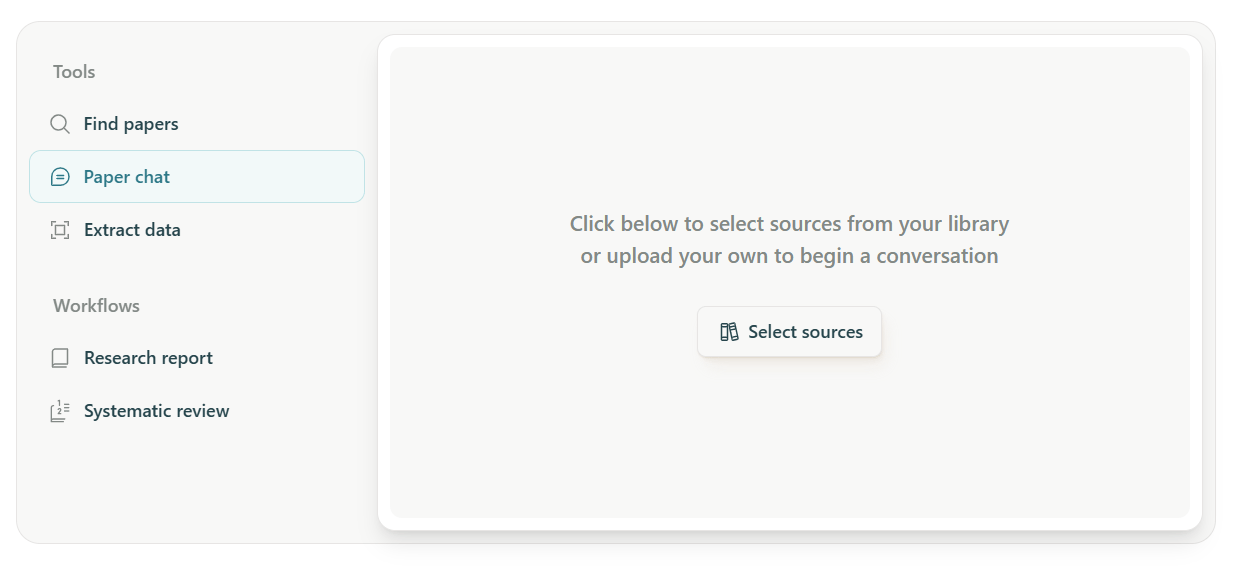
Elicit’s Paper Chat feature works similarly to Google’s NotebookLM, in that both tools take an uploaded document and generate a structured, source-grounded summary you can interact with. Elicit extracts key points, highlights major findings, and organizes the content into a clear, tabular format.
Elicit key features:
-
Semantic similarity ranking of sources to assess relevance beyond keyword match; users can refine results with metadata filters.
-
Tools for automating systematic review workflows, such as screening articles, extracting quantitative or qualitative data, and generating structured Reports.
-
Customizable research workflows including searchable “task” templates (e.g., brainstorming research questions and suggesting search terms) and extraction tables that can be exported for further analysis.
-
Basic - Free. Includes unlimited search across more than 125 million papers, chat/summaries for up to 4 full-text papers, and data extraction from 20 papers per month.
-
Plus - $10/ month. Adds unlimited search across more than 500 clinical trials, chat/summaries for up to 8 full-text papers, and data extraction from 600 papers per month.
-
Pro - $42/month. Includes all features in Plus, dedicated workflows for systematic reviews, extract data from 4200 papers/year, and 10 personalized research Alerts.
-
Team - $65/month. Includes all Pro features, data extraction from up to 3,600 papers per user per year, live-editing for Notebooks and systematic reviews, and admin panel with usage tracking and seat management.
-
Enterprise - Custom pricing. For large institutions, includes all Team features, screen from 1,000 papers at a time, volume discounts, and training and onboarding.
8. WolframAlpha for academic problem solving
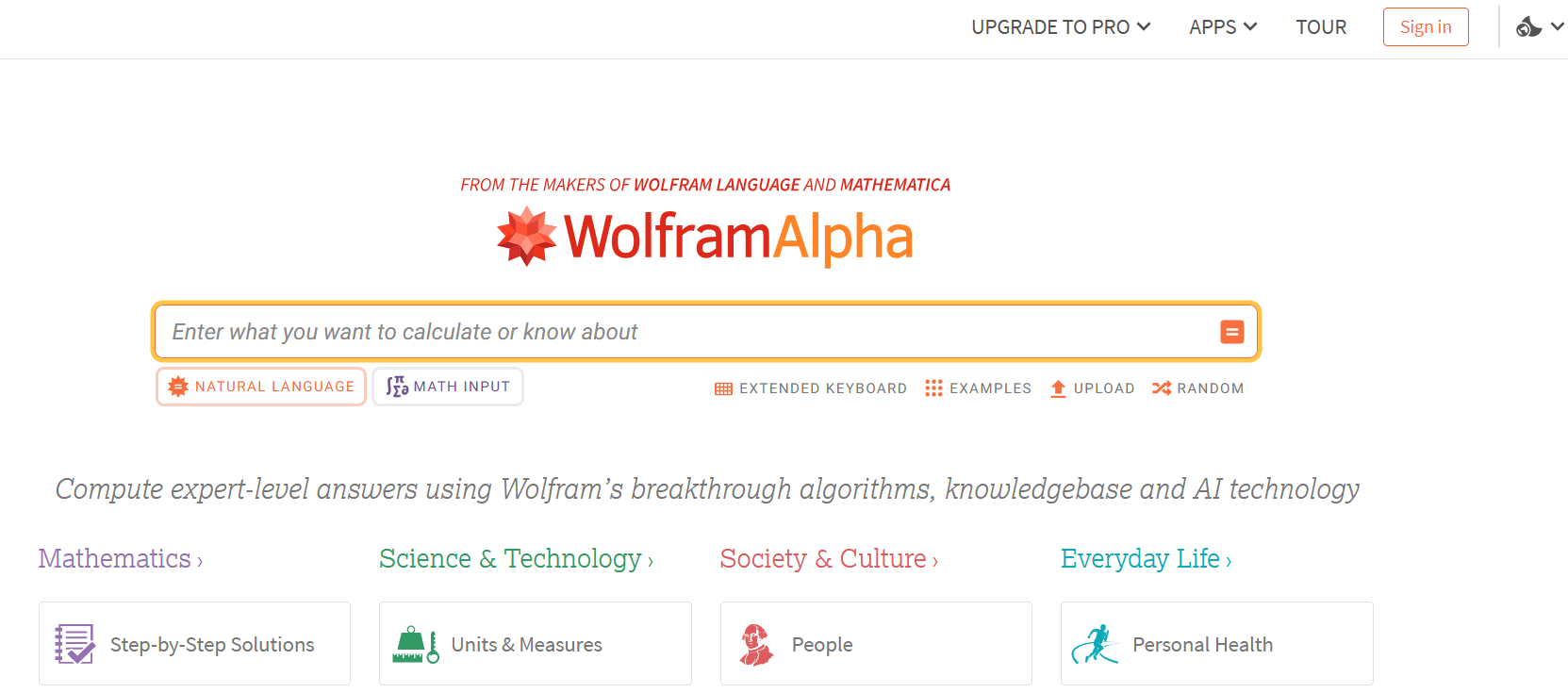
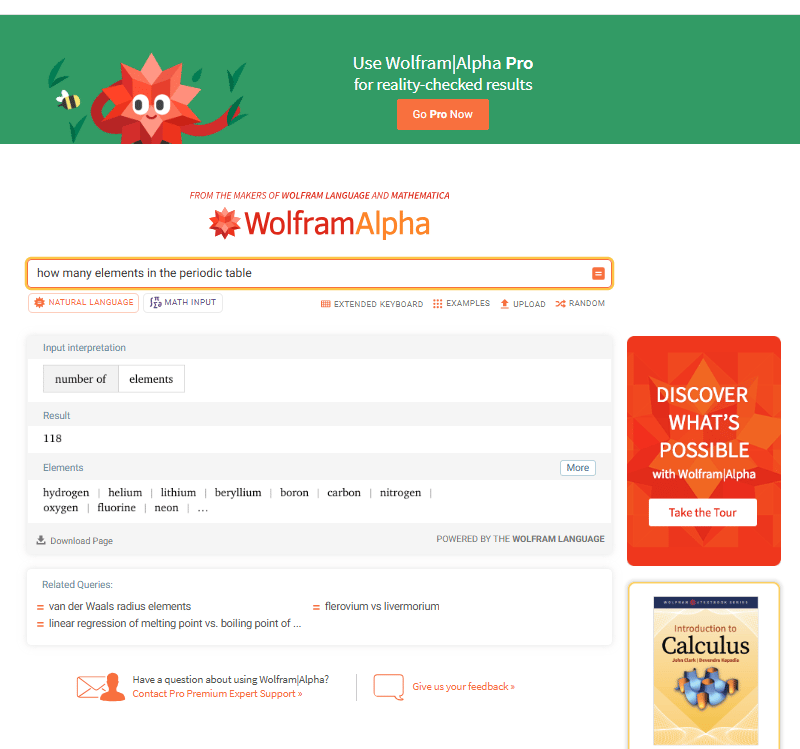
WolframAlpha is a search engine—perhaps most known for mathematics—hat interprets natural-language questions, identifies relevant entities and units, and produces verifiable results, from physics and chemistry to linguistics, food & nutrition, political geography, and engineering. The platform offers Wolfram Notebook Assistant, which integrates AI assistance with symbolic computation. Users can ask the assistant to analyze data, fix code, generate examples, or build computations inside a notebook. It uses Wolfram Language under the hood to run code, add labels, generate visualizations, and guide users through complex workflows.
WolframAlpha key features:
-
Performs step-by-step mathematical, scientific, and data-driven computations using curated datasets and symbolic algorithms, rather than relying on search-based retrieval.
-
WolframAlpha web app and mobile apps provide specialized computation interfaces for education, engineering, and finance.
-
Offers an example library with ready-made query templates spanning math, science, engineering, humanities, finance, and everyday problem-solving.
-
The Wolfram Problem Generator creates unlimited practice problems with built-in solutions for various subjects.
-
Basic - Free. Includes personalized experience and customizable settings. Does not include step-by-step solutions.
-
Pro - $5/month ($60/year). Includes step-by-step solutions, 2X increased computation time, and access to calculator apps.
-
Pro Premium - $8.25/month ($99/year). Provides unrestricted access to all features and priority customer support.
Perplexity alternatives FAQs
What are the best Perplexity alternatives for research in 2026?
ChatGPT assists with deep research across topics, Google Gemini adds strong multimodal reasoning, Google Scholar is useful for citation-backed academic discovery, Brave Search is ideal for privacy browsing, Exa is useful for exploring recent sources, Elicit supports academic literature reviews, and WolframAlpha excels at computational, mathematical, and factual queries.
How do these AI search engines enhance research workflows?
AI search engines enhance research workflows by automating the entire “search, evaluate, synthesize” process. They retrieve relevant sources, extract insights and summaries, and refine results naturally with follow-up questions like filtering by date or comparing findings. This reduces the need to open multiple tabs or manually piece together information.
Which tools offer citation-backed answers?
Tools that offer citation-backed answers include Google Gemini, Elicit, Exa, ChatGPT, Brave Search, and WolframAlpha. Each provides source-linked outputs in different ways, like footnote citations, academic paper references, URL metadata, or scientific resource citations.
Are there AI search engines that provide real-time information?
Several AI search engines can provide real-time or near real-time information, but only when they actively retrieve data from the web. Tools like ChatGPT (with browsing enabled), Brave Search, and Exa can pull fresh information from indexed pages or live URLs at the moment of the query.
Note: The AI models behind these tools rely on training data with fixed cutoff dates, so only the retrieval layer is real-time, not the model’s built-in knowledge. Real-time results come from web search and indexing, not from the model’s internal memory.
What are the pricing models for AI search engines?
Pricing varies from free tiers for basic usage to pay-as-you-go credits or custom plans for enterprise and businesses. Platforms like Exa and Brave Search provide API-based pricing where users pay per search, page read, or data extraction task. Tools such as ChatGPT and Google Gemini use subscription tiers that grant a fixed set of monthly usage limits with paid plans.
Which tools are best suited for academic researchers?
Academic researchers get the most value from tools that retrieve citations, access scholarly databases, and extract insights from papers. Elicit is a good option for directly searching research papers, Google Scholar for answering detailed research questions, PubMed, and clinical studies, while ChatGPT with browsing helps interpret findings and draft summaries. Exa complements both by helping trace high-quality sources and original references across the web.
Note: Pricing and product information are correct as of November 2025, and are subject to change.
Accelerate your AI projects with DigitalOcean Gradient™ AI Droplets
Unlock the power of GPUs for your AI and machine learning projects. DigitalOcean GPU Droplets offer on-demand access to high-performance computing resources, enabling developers, startups, and innovators to train models, process large datasets, and scale AI projects without complexity or upfront investments.
Key features:
-
Flexible configurations from single-GPU to 8-GPU setups
-
Pre-installed Python and Deep Learning software packages
-
High-performance local boot and scratch disks included
Sign up today and unlock the possibilities of GPU Droplets. For custom solutions, larger GPU allocations, or reserved instances, contact our sales team to learn how DigitalOcean can power your most demanding AI/ML workloads.
About the author

Sujatha R is a Technical Writer at DigitalOcean. She has over 10+ years of experience creating clear and engaging technical documentation, specializing in cloud computing, artificial intelligence, and machine learning. ✍️ She combines her technical expertise with a passion for technology that helps developers and tech enthusiasts uncover the cloud’s complexity.
Start building today
From GPU-powered inference and Kubernetes to managed databases and storage, get everything you need to build, scale, and deploy intelligent applications.
